Employee loyalty today has become a quiet casualty of the modern workplace. Nearly five million people who once showed up with energy and intent are now mentally checked out.
And before you blame "kids these days" or "nobody wants to work anymore," let me stop you. 73% of employees, including your reliable, steady, "loyal" ones, would leave if the right offer came along. That's not a statistic, that's a mass exodus of human commitment happening in slow motion right in front of us.
The question isn't whether your people are loyal. The question is, why should they be? That’s why building employee loyalty in 2026 requires a fundamental reset. Because loyalty takes root when people feel genuinely valued, supported, and connected to something meaningful.
In this blog, we will explore powerful ways to improve and enhance employee loyalty in the workplace. Because in today’s workplace, loyalty isn’t a given. It’s a choice employees make every day.
What Does "Employee Loyalty" Really Mean in the Modern Workplace?

Employee loyalty today goes far beyond tenure or a low attrition rate. At its core, it reflects an employee’s emotional and psychological commitment to the organization.
It’s the decision to stay invested, not because it’s convenient, but because the relationship feels reciprocal and worth sustaining. It is the willingness to stay invested, advocate for the company's success, and choose to stay even when other opportunities arise.
What is the Business Impact of a Loyal Workforce?
Employee loyalty is often discussed in emotional terms, but its consequences are unmistakably commercial. It shapes how long people stay, how well they work, how teams function, and how customers experience the brand.
When loyalty is present, organizations gain an advantage that is both cultural and financial. Here’s how that advantage reveals itself.
Reduced Turnover: The Hidden Money Pit
Let's start with the obvious one. When looking at an average of employees earning $75,000 annually, replacing workers costs approximately 33% of their annual salaries.
If you do math, let’s say you lost ten people. That's $250,000 straight off your bottom line. But that's only the visible cost. What about the institutional knowledge that walks out the door? The relationships with clients that dissolve?
Moreover, what about the high-performing employees that are pulled away from strategic work to train replacements, slowing progress in ways spreadsheets rarely capture. Over time, frequent turnover becomes less of an HR issue and more of an operational drag.
Higher Productivity: Engaged Employees Stay Loyal
Organizations with high employee engagement report a 17% increase in productivity, but the statistic only tells part of the story. (TeamStage.)
Think of it this way. When you're mentally checked out, you do the bare minimum. But when you are invested? You spot inefficiencies, you propose solutions, you take ownership of problems before they become crises.
Loyal employees commit. They pay attention. They question inefficiencies. They take responsibility for outcomes, not just tasks. This distinction matters because productivity doesn’t surge because people work longer hours; it rises because people care enough to work smarter.
The Profitability Connection: It All Adds Up
According to research, companies with high employee engagement outperform competitors in earnings per share by 147% (Access Perks.) This margin isn’t driven by a single initiative or a momentary boost in morale. It’s the result of accumulation.
Lower turnover reduces recurring hiring costs, and higher productivity stretches every payroll dollar further. Employees who feel invested deliver experiences that keep customers coming back. In the end, loyalty functions less like a benefit and more like a business multiplier.
What is the "Loyalty Loop" Between Employees and Customers?
Employee loyalty and customer loyalty are often discussed as separate goals. In reality, they operate as a loop, one quietly reinforcing the other.
When employees feel valued, trusted, and connected to their organization, it changes how they show up for customers. Service becomes less transactional and more attentive. Problems are solved with ownership rather than escalation. And customers notice this. They sense consistency and effort. Over time, that feeling becomes trust. And trust, repeated often enough, turns into loyalty.
That customer loyalty then feeds back into the workforce. Positive feedback, repeat business, and brand pride reinforce employees’ belief that their work matters. They see the impact of their effort not just in metrics, but in relationships. The loop tightens.
Organizations that invest only in customer experience while neglecting employee experience eventually feel the strain. Frontline teams burn out. Service quality flattens and the customer experience starts to feel hollow.
What are the "Types" of Loyalty?
Employee loyalty isn’t a single emotion or behavior. It exists in layers, shaped by motivation, circumstance, and belief. Some forms of loyalty are deeply personal. Others are practical. A few are merely situational.
Below are the most common types of employee loyalty:
- Emotional Loyalty: This type of loyalty stems when employees feel a deep emotional connection to their organization. They take pride in their contributions, care about outcomes, and feel personally invested in the company’s success.
- Transactional Loyalty: This loyalty is based on mutual self-interest. It is driven by rewards, incentives, or benefits the employer offers. This type of loyalty keeps employees present but not necessarily engaged.
- Cultural Loyalty: This loyalty stems from an employee's alignment with the organization’s values, missions, and way of working.
- Tenure Loyalty: This form of loyalty develops over time. Employees stay because the organization has become familiar, predictable, and deeply woven into their professional identity.
- Normative Loyalty: This type of loyalty is driven by obligation. Employees feel the need to stay with the organization out of loyalty to leaders, teams or opportunities the organization once provided.
- Continuance Loyalty: Continuance loyalty exists when employees stay because leaving feels too costly both financially and professionally.
- Blind Loyalty: It refers to being unquestioningly faithful, often without considering whether the actions are right or ethical.
- Advocacy Loyalty: This type of loyalty emerges when employees don’t just believe in the organization but also actively promote it.
How is Loyalty Different from Engagement or Commitment?
Employee loyalty, engagement, and commitment are often used interchangeably, but they describe different layers of the employee–organization relationship.
Engagement is more about how involved, focused, and motivated employees feel in their day-to-day work. Commitment on the other hand refers to an employee’s psychological attachment to the organization and identification with its goals, values, and direction.
And, loyalty is what happens when employees are willing to stay and advocate for the organization even when the conditions aren’t ideal.
What Are the Core Strategies for Building Employee Commitment?
How Does Building a High-Trust Culture Affect Loyalty?
Trust is the starting point of loyalty. Without it, even the most generous benefits feel hollow. You see, high-trust cultures are built on three essentials. They are:
- Transparent Communication: Employees don’t expect leaders to have perfect answers, but they do need clarity and transparent communication. And in the long run, credibility is what keeps employees engaged, grounded, and willing to stay committed through uncertainty.
*** Psychological Safety**: When employees feel safe speaking up, questioning decisions, sharing ideas, or admitting mistakes, they develop a deeper sense of ownership. They’re more likely to stay during uncertainty because they believe their voice still matters.
- Leadership Consistency: Consistency is what ultimately seals trust. Leaders don’t need to be perfect, but they do need to be predictable in their values. When actions consistently align with words, loyalty starts feeling rational.
What Is the Relationship Between Employee Recognition and Loyalty?
Recognition is one of the most powerful drivers of loyalty. When employees are appreciated, and rewarded for their work, they’re far more likely to stay loyal. Research consistently shows that employees who receive high-quality recognition are 45% less likely to leave within two years.
But not all recognition carries the same weight. And it turns out, there are four distinct types of recognition, each serving a different but equally important purpose:
Existential Recognition: You Matter as a Person
It affirms the employee as a person, not just as a performer or what they have accomplished. It is about remembering someone's name or noticing when they're struggling and offering support without them having to ask.
Work Practice Recognition: How You Work Matters
This acknowledges how someone approaches their work. It could be their collaboration style, their problem-solving creativity, the way they mentor others, or their attention to detail. You don’t wait for the big win to speak up. You notice and acknowledge the everyday behaviors.
Job Dedication Recognition: Consistency Counts
It’s about recognizing the person who consistently delivers quality work, shows up for their team, and upholds standards even when there’s no spotlight or immediate reward.
Results-Based Recognition: Achievements Deserve Acknowledgment
Yes, outcomes matter. When someone closes the deal, ships the product, or exceeds their goals, that deserves celebration. This is the type of recognition most companies are actually comfortable with because it's measurable, quantifiable, and easy to justify.
However, when organizations rely solely on results-based recognition, loyalty becomes conditional. When recognition covers all four types, it resonates more deeply, helping employees feel seen as whole people, not just performers.
How Do Career Growth Opportunities Foster Commitment?
Nothing undermines loyalty faster than stagnation. Employees today are rarely chasing a job title alone; they want trajectories. They want to know that the work they are doing now is leading somewhere.
Offering learning and development programs signals that the organization is willing to invest before it expects returns. Moreover, when growth is visible and supported, commitment shifts from conditional to intentional. People stay not because they have to, but because leaving would mean walking away from a future they are actively building.
How Does a Focus on Well-Being Impact an Employee's Dedication?
Well-being is no longer a peripheral benefit. It’s a loyalty issue. Employees who feel chronically exhausted, unsupported, or stretched thin may remain employed but their dedication steadily erodes.
By contrast, organizations that prioritize flexibility, mental health, and work-life balance see a powerful payoff. Their employees are three times more likely to stay with the company, not marginally, but decisively (SelectSoftware Reviews).
And it's not just about retention. When employees' wellbeing is thriving, they take fewer sick days, deliver higher performance, and have lower rates of burnout and turnover.
How Do You Build Employee Loyalty Through a Recognition & Rewards Program?

Step 1: Define the Behaviors You Want to Recognize
This is where most programs go off the rails immediately. They create vague categories like "teamwork" or "going above and beyond" that sound nice but mean nothing in practice. What does "teamwork" actually look like in your organization? Be specific.
For example:
Instead of "innovation" - Recognize "proposed and tested a new approach that improved team efficiency"
Instead of "leadership" - Recognize "mentored a struggling colleague and helped them succeed"
Instead of "customer focus" - Recognize "went beyond the standard process to solve a customer's unique problem"
Only 41% of organizations emphasize results-based nominations, meaning many programs do not optimally support employee success or incentivize key employee behaviors (HR Executive). Don't make that mistake. Be explicit about what deserves recognition and why.
Step 2: Determine Who Can Give Recognition
Most organizations limit recognition to managers and leaders. On paper, that feels orderly. In practice, it’s a missed opportunity.
The strongest recognition systems don’t flow in a single direction. They move everywhere. Peer-to-peer, manager-to-employee, employee-to-manager, and across departments.
When recognition is open at every level, it stops feeling like a reward handed down and starts feeling like a shared culture. It gives everyone a voice, and everyone plays an important role in noticing what good work really looks like.
Step 3: Set Your Reward Types
This is where you need to get real about budget, preferences, and what will actually resonate with your people. Sometimes, recognition itself is often more valuable than the reward. But pairing meaningful recognition with thoughtful rewards creates an even stronger impact.
Here are a few reward options you can consider to make recognition more meaningful and impactful:
Monetary Rewards
It includes bonuses, gift cards, commissions, stock options, and profit-sharing. These are flexible and appreciated, but they need to feel substantial enough to matter.
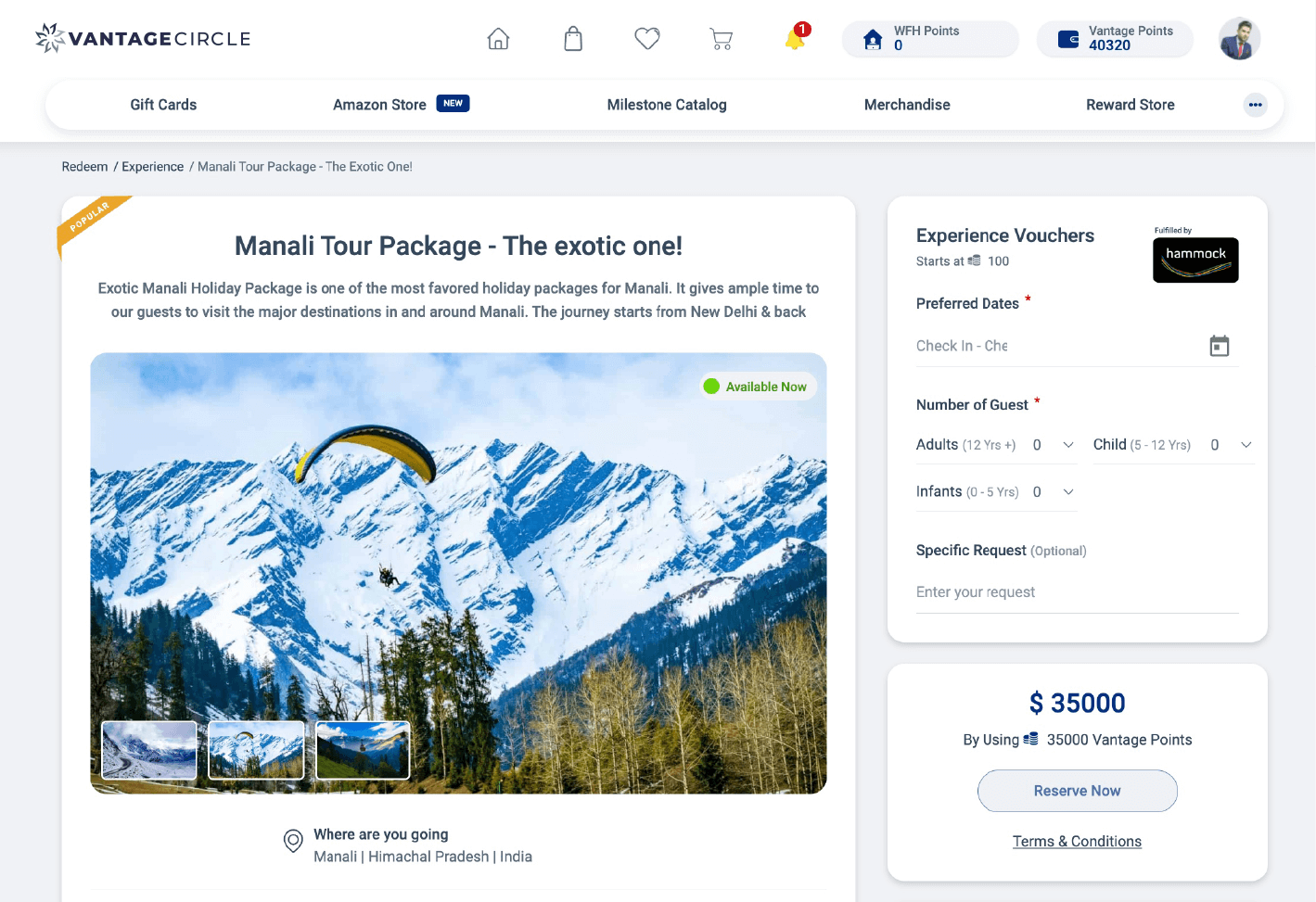
Experiential Rewards
Extra PTO, team outings, holiday packages, professional development opportunities, tickets to events. These create memories and show you understand people's lives extend beyond work.
Source: Vantage Recognition
Symbolic Rewards
Trophies, certificates, or digital badges may seem simple, but when tied to real achievements and given thoughtfully, they carry lasting meaning.
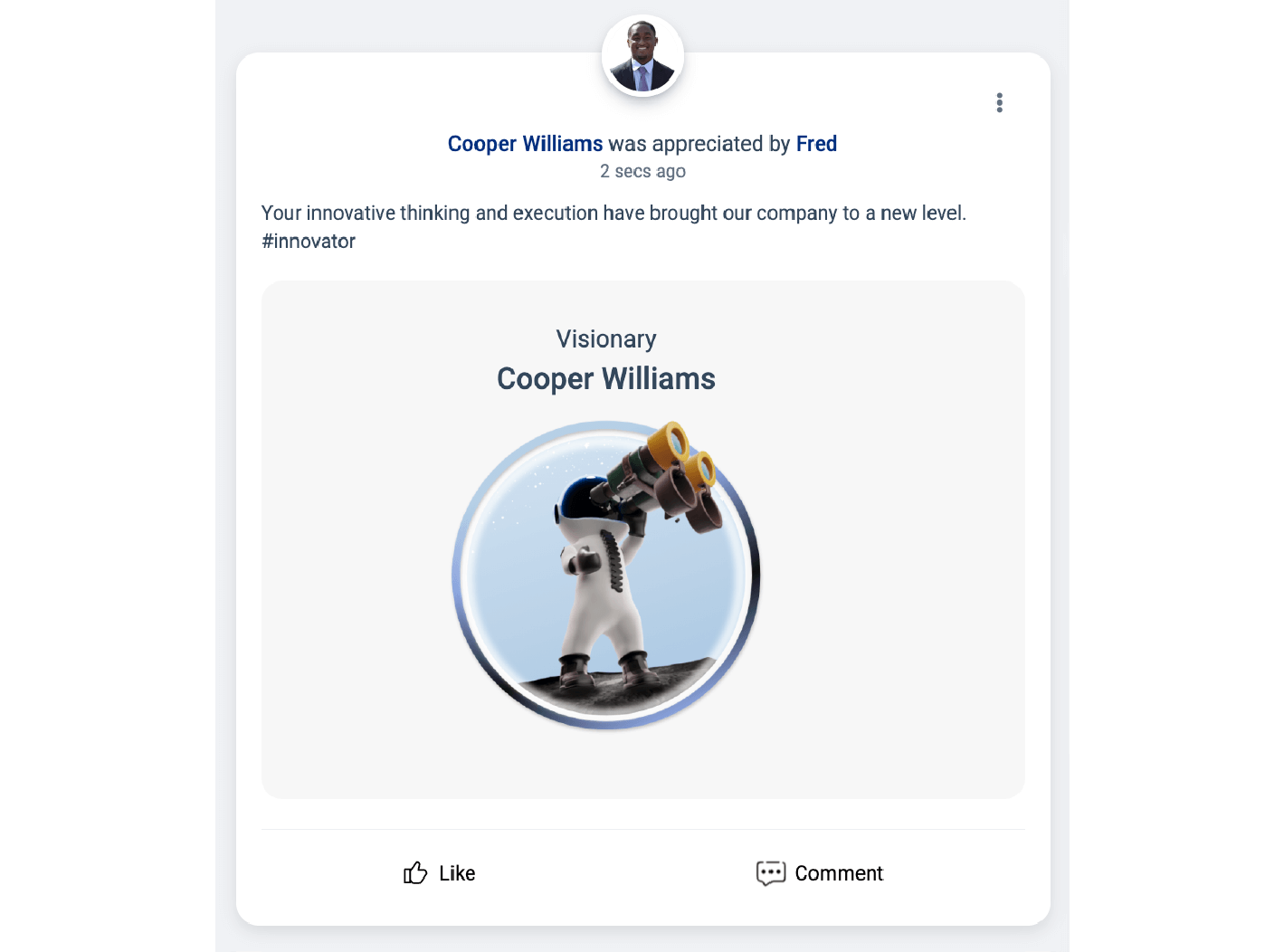
Recognition-Based Rewards
Public acknowledgment in meetings, features in company communications, and profile spotlights. For many people, especially high performers, visibility and reputation matter as much as money.
Source: Vantage Recognition
Step 4: Build the Infrastructure
You cannot build employee loyalty through annual bonuses; it is strengthened on small, steady moments. When recognition happens weekly, employees are 2.6 times more likely to be highly productive. But that kind of consistency isn’t humanly scalable without technology.
For that you need to look for platforms that make recognition:
- Effortless to give: Mobile-friendly and embedded into existing workflows
- Visible: Public recognition that amplifies impact and sets cultural cues
- Values led: The ability to tag and reinforce the behaviors that matter most
- Data-rich: Clear insights into who’s recognizing, who’s being recognized, and where gaps exist
But here’s the truth, recognition platforms only works if people actually use it. The most feature-rich system means nothing if recognition still feels awkward, time-consuming, or disconnected from daily work.
Recommended Resource: How to Recognize Employees with Microsoft Teams Using Vantage Circle?
Step 5: Communicate is the Key
Most recognition programs fail not because they're poorly designed, but because nobody knows they exist or understands how to use them. When you launch, you need to create:
- Visible leadership buy-in: If executives aren’t actively recognizing others, participation will stall. People follow what leaders do, not what they endorse.
- Clear, practical guidance: Don’t just explain why recognition matters. Show them how to recognize, with real examples employees can copy.
- Ongoing reminders: Reinforce the habit through monthly emails, Slack nudges, and call-outs in team meetings.
- Shared success stories: Spotlight meaningful recognition moments to model the behavior you want to see repeated.
How Can You Measure Employee Loyalty?

One of the most common mistakes organizations make is assuming loyalty can be felt but not measured. In reality, commitment leaves a trail.
I’ve learned that the most reliable picture of loyalty comes from combining two lenses. Quantitative metrics and qualitative signals. The former shows what’s happening at scale and the later reveals how employees are actually experiencing the workplace.
When used together, they tell a far more honest story than either ever could alone.
What Quantitative Metrics Define Loyalty?
Metrics don’t capture emotion, but they do capture patterns. Some of the most revealing indicators include:
- Employee Net Promoter Score (eNPS): This measures how likely employees are to recommend the organization as a place to work. While it’s a single question, the trend over time speaks volumes about trust and advocacy.
- Retention Rate: Employee loyalty reveals itself in who stays. A stable or improving retention rate signals that employees see a future with the organization.
- Average Tenure: It adds context to retention. Longer tenure often reflects stability and institutional confidence, particularly when paired with internal mobility.
- Absenteeism: Rising absenteeism is frequently an early warning sign. When commitment erodes, presence often becomes the first casualty.
How Does Surveys Specifically Help Measure Loyalty?
Metrics tell you what is happening. But surveys help you understand the reason.
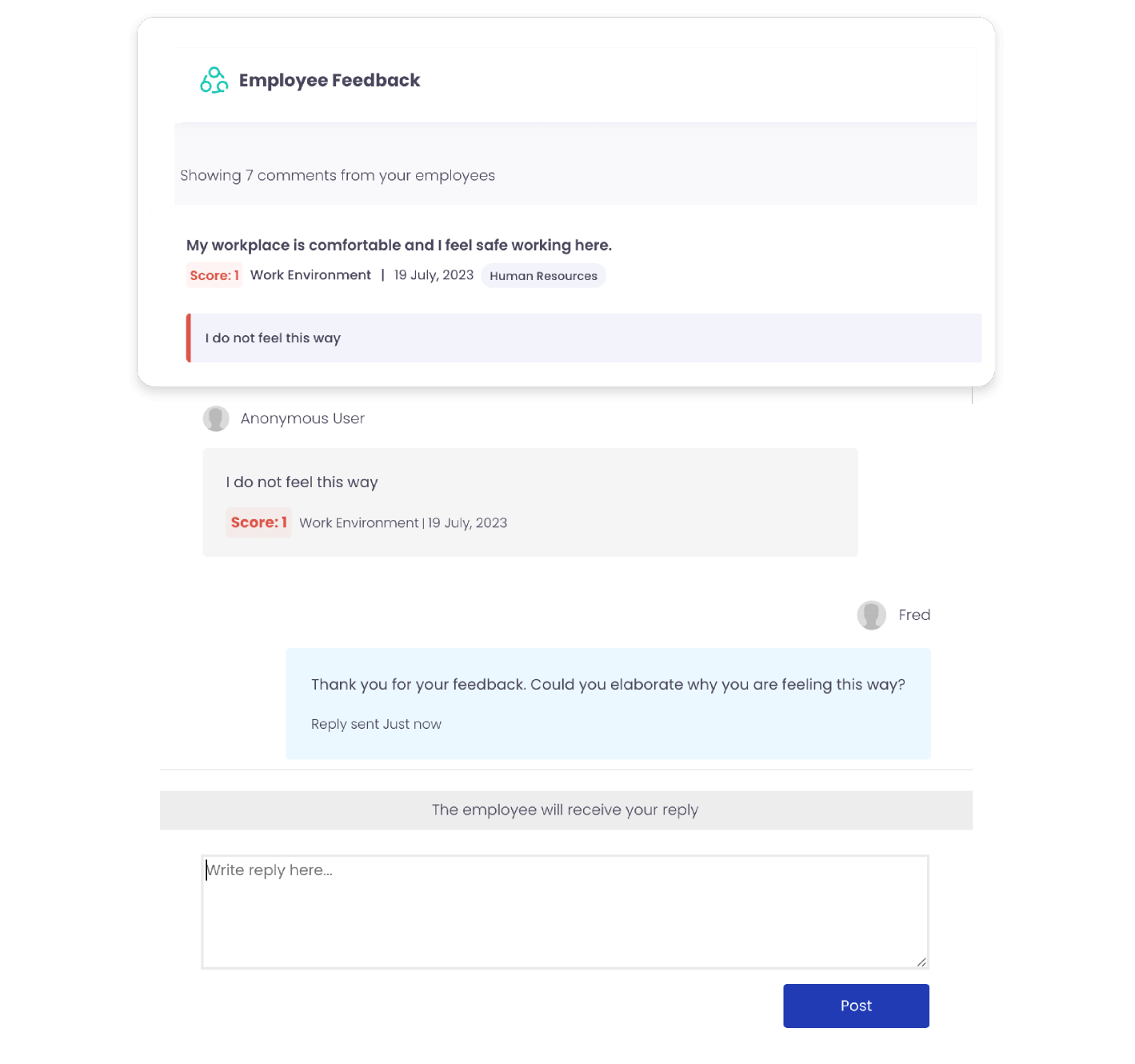
Regular pulse surveys give employees a structured way to express how they feel before disengagement turns into attrition. It reveal trust gaps, recognition blind spots, and leadership misalignment early.
Tools like Vantage Pulse are especially effective in this regard. Their short and frequent surveys allow organizations to track sentiment in real time. It eliminates the lag, replacing annual engagement data that arrives long after the moment to act has passed.
Just as important, these surveys are anonymous, creating a safe feedback loop where employees are more likely to be honest.
Source: Vantage Pulse
What Are the Qualitative Signs of Declining Commitment?
Sometimes not all warning signs show up neatly on dashboards or reports. Declining loyalty often reveals itself much earlier in everyday behaviors. The subtle shifts in how people show up to work or when the initiative fades. These small signals are often the earliest indicators that something is off, long before the data catches up.
Therefore, paying attention to these signals matters as much as tracking scores. Managers’ observations, open-ended feedback, and changes in team dynamics often reveal shifts in commitment well before metrics confirm them.
Conclusion
Employee loyalty isn't something you demand; it's something you earn. And in 2026 it isn't something you announce in a town hall or launch with a company-wide initiative. It's something you build quietly and consistently.
It is built when recognition happens in the moment, not months later. When flexibility is real, not performative. When someone raises a concern and actually sees something change because of it.
FAQs
1. What tools drive long-term employee loyalty?
Consistent recognition platforms, pulse surveys, career development tools, and wellbeing support systems help drive long-term employee loyalty.
2. Why is it so important to foster employee dedication?
Employee dedication drives stronger performance, lower turnover, and greater resilience. It also creates teams that don’t just work for the organization but grow with it.
3. How can you tell if employees are loyal?
Employee loyalty shows up in consistent performance, advocacy, collaboration, and the willingness to stay even during periods of change or uncertainty.

Shikha Gogoi is a Content Marketing Specialist focused on SEO-driven content around employee engagement, recognition, and workplace culture, helping build people-first workplaces.
Connect with Shikha on LinkedIn.