


Recognition gaps cut discretionary effort nearly in half (State of Recognition and Rewards 2025, Vantage Circle). Yet most bonus programs are still built around the annual review.
Spot bonuses break that cycle.
A spot bonus is a one-time, discretionary payment a manager gives an employee right after exceptional work, outside the regular review or bonus cycle. Most range from $50 for a quick win to a few thousand dollars for a result that saves a quarter. Because the reward lands while the work is still fresh, it reinforces exactly the behavior you want repeated.
This guide covers how much to give, how spot bonuses are taxed, how they compare with performance and retention bonuses, and 7 steps to run a program your employees see as fair.
Key takeaways
- As used in this article, a spot bonus is monetary (cash, gift cards, or points); a spot award is typically non-monetary, such as a public shout-out or extra time off. Terminology varies across organizations.
- Spot bonus amounts vary widely by contribution and company size.
- Cash spot bonuses are supplemental wages; employers typically withhold federal tax at a flat 22% for bonuses under $1 million (IRS Publication 15, 2026).
- A fair program needs clear criteria, per-manager budget limits, and a quarterly distribution review.
What Is a Spot Bonus?
A spot bonus is a one-time cash or cash-equivalent reward given to an employee on the spot for a specific achievement, outside their regular pay and review cycle.
Spot bonuses are typically granted at the manager's discretion, and their value tends to be more modest than that of other bonus types. "Cash-equivalent" includes gift cards and redeemable reward points, both of which are treated as cash for tax purposes.
In most cases, the value of the spot bonus reflects the organization's budget and the manager's assessment of the employee's contribution. A spot bonus is one type of discretionary bonus: it is not owed under any contract and is paid entirely at the employer's discretion.
How Does a Spot Bonus Work?
A manager spots a specific contribution, selects an amount from a pre-set range, gets approval if the amount is above their limit, and pays it through payroll or as redeemable points within days.
The trigger is typically one observable event: a sales rep closes a difficult renewal, an engineer resolves a production outage, a customer service rep salvages an at-risk account. Unlike annual bonuses, no review cycle is needed.
Most programs allow managers to award directly within a budget wallet. Some also allow peer nominations, where a colleague flags a contribution and a manager approves the award, sometimes called a peer bonus.
Spot Bonus vs Spot Award
As used in this article, a spot bonus is monetary; a spot award is typically non-monetary, such as a public shout-out, a badge, an extra day off, or a certificate.
Both are given on the spot for a specific contribution. The form of the reward is what separates them: if it has cash or redemption value, it is a spot bonus. If it recognizes without a cash component, it is a spot award. Keep this distinction consistent across your program so employees and managers stay on the same page.
Spot Bonus vs Performance Bonus vs Retention Bonus
A spot bonus rewards one specific contribution right away; a performance bonus rewards results over a review period; a retention bonus pays employees to stay through a set date.
The 3 types differ in what triggers them, when they are paid, and how much they typically are. The comparison table below also includes discretionary and signing bonuses, since these often come up in the same conversations. Typical ranges vary widely by company size and industry.
| Bonus type | What triggers it | When it is paid | Typical size | Discretionary or planned? |
|---|---|---|---|---|
| Spot bonus | One specific exceptional contribution | Same day to a few days | Varies by contribution; see sizing guide | Discretionary |
| Performance bonus | Results over a review period | Quarterly or annually | Varies by role and company | Planned |
| Retention bonus | Agreement to stay through a target date | On the target date or in installments | 10% to 25% of annual salary (Mercer) | Planned |
| Discretionary bonus | Employer's choice; no fixed criteria required | Anytime | Varies by company | Discretionary |
| Signing bonus | Accepting a job offer | On start date or after a trial period | Varies widely by role and industry | Planned |
Use a spot bonus when you want to reinforce a behavior the same week it happens. Use a performance bonus for sustained results over a quarter or year. Use a retention bonus when you need a key employee to see a critical project through to completion. For a full breakdown of types of employee bonuses, see our dedicated guide.
How Much Is a Spot Bonus?
Spot bonus amounts vary widely by company size and the significance of the contribution. Published employer benchmarks give a useful anchor: Salesforce (2024) notes spot bonuses often range from $100 to $5,000+; Lehigh University HR sets program limits of $500 to $3,000. No single industry-wide benchmark exists from a major compensation body.
The key is ensuring the bonus is meaningful enough to express genuine appreciation while staying within your organization's budget. The 4-tier sizing framework below ties each level to the type of contribution and the approval it requires. It is based on how Vantage Recognition programs are typically configured, not survey data.
| Tier | What it recognizes | Suggested range | Who approves |
|---|---|---|---|
| Thank-you | Small extra effort: a fast turnaround, helping a colleague, a useful process shortcut | $50 to $200 | Manager alone |
| Standout | Above-and-beyond on a specific task: strong client feedback, solving a team-level problem | $200 to $1,000 | Manager alone |
| High-impact | One measurable result: revenue won, cost saved, customer retained | $1,000 to $3,000 | Manager plus HR |
| Exceptional | Project- or quarter-defining contribution | $3,000 to $5,000+ | Senior leadership |
For employees who repeatedly demonstrate the same behavior, escalate the tier rather than paying the same amount each time. In most programs, a flat repeat award eventually stops feeling like recognition.
The data confirms this: 60% of high-effectiveness recognition programs use escalating rewards, badges, or titles to differentiate employees who repeatedly display desired behaviors. Among lower-effectiveness programs, only 13% do so (State of Recognition and Rewards 2025, Vantage Circle).
Set an annual spot pool as a percentage of payroll, give each manager a budget wallet, and review spending quarterly. A per-manager limit keeps most bonuses same-day, while awards above that limit get a second review. For help sizing the annual pool, see recognition budget planning.
Are Spot Bonuses Taxable?
Yes. In the US, cash spot bonuses are supplemental wages under IRS Publication 15 (2026). Employers can withhold using the flat 22% method (for bonuses under $1 million) or the aggregate method, which applies the employee's regular withholding rate to the combined pay. For amounts above $1 million, the 37% rate is mandatory. FICA (Social Security and Medicare) and applicable state income tax also apply.
3 additional tax points HR leaders need to know before setting up a program:
Gift cards are treated as cash equivalents and are fully taxable at any value. Under IRS Publication 15-B, cash and cash equivalents (including gift cards) explicitly cannot qualify as a tax-free de minimis fringe benefit, regardless of the dollar amount.
Reward points are generally taxable; timing depends on how the program is structured and whether points can be converted to cash.
Gross-up: decide at program design time whether to gross up awards so employees receive the full stated amount after withholding. Under the flat method, a $1,000 bonus nets roughly $780 after 22% federal withholding; add standard FICA and the illustrative take-home is closer to $700. Actual net varies by Social Security wage base status, state tax, and individual circumstances. A gross-up is a program-wide decision, not a per-bracket one, and the cost should be factored into your annual spot pool budget.
For the full treatment of each recognition format under US tax law, see employee recognition tax rules in the US. For employees based in India, see tax rules for rewards in India.
This section is informational only and is not tax advice. Confirm the applicable withholding rate in the current edition of IRS Publication 15 before processing any payments.
Do Spot Bonuses Work? 5 Reasons They Do
Yes. Spot bonuses work because the reward lands while the behavior is still fresh.
Among R&R programs rated highly effective on both engagement and behavioral reinforcement, 86% also report high effectiveness on productivity and performance (State of Recognition and Rewards 2025, Vantage Circle). Spot bonuses are a behavioral reinforcement tool: the reward names one specific behavior, pays for it immediately, and makes it more likely to recur.
Dr. Bob Nelson, employee recognition author and founder of Employee Appreciation Day, puts it plainly: "If you reinforce performance, you will get more performance. If you reinforce presence, you get more people just saying, hey, I'm still here." You can hear the full conversation in our podcast with Dr. Bob Nelson.
1. They Close the Gap Between Review Cycles
Waiting until a quarterly or annual review to acknowledge exceptional work breaks the link between the behavior and the reward. By the time the review arrives, the employee has moved on to ten other things. An immediate payment keeps the connection intact, which is what makes it actionable rather than ceremonial.
2. They Reinforce One Specific Behavior
Because a spot bonus is tied to a single, named event, employees know exactly what earned it. That specificity is what turns a one-time payment into a meaningful signal about what the company values. The behavior gets named, paid for, and is more likely to be repeated.
3. They Reward Results Without a Permanent Pay Increase
A spot bonus recognizes a contribution without raising the salary baseline, which matters when the achievement is exceptional but not a routine part of the role. Managers can respond proportionately to a one-time result, demonstrating genuine appreciation without creating a long-term compensation expectation.
4. They Give Managers a Fast, Budgeted Tool
Managers with a pre-set budget wallet can award a spot bonus the same day, without waiting for HR approval on every payment. The budget cap keeps spending predictable while keeping the recognition immediate. It also gives managers a structured way to act on what they observe, rather than waiting for a formal process.
5. They Signal What the Company Values to Everyone Else
When a spot bonus is posted publicly with the reason, the signal reaches the whole team, not just the recipient. Instant recognition of one person teaches everyone else what excellent looks like. That clarity shapes behavior more than any all-hands culture talk.
Cash, Gift Cards, or Points: Choosing a Spot Bonus Format
Pay a spot bonus as cash when speed and simplicity matter, and as gift cards or reward points when you want employees to choose the reward and remember it.
Over three-quarters of companies rely on the monetary value of awards alone to motivate employees. Fewer than one in three currently pair monetary awards with social recognition. Closing that gap matters: the social layer extends the recognition signal to the whole team, not just the individual recipient (AIRe R&R Report 2023-24, Vantage Circle).
The strongest programs pair the monetary value with a public "why" posted to a social recognition feed. The money motivates the individual recipient; the posted reason reinforces the behavior for the entire team.
| Format | Best for | Watch-outs | Tax note |
|---|---|---|---|
| Cash via payroll | Speed and simplicity; employees who prefer direct payment | No choice for the employee; subject to standard payroll timing | Withheld as supplemental wages (typically 22% flat federal rate) |
| Gift card | Memorable rewards; employees who value choice | Treated as a cash equivalent; no de minimis exemption applies at any value | Fully taxable at any value |
| Reward points | Global teams; employees who want flexibility; programs that need to track distribution | Requires a redemption platform | Generally taxable; timing depends on program design |
For a deeper look at each option, see cash vs non-cash incentives, points-based rewards, and gift card incentives for employees.
Drawbacks of Spot Bonuses and How to Avoid Them
Spot bonuses backfire when employees see them as a substitute for fair pay, when the same people always receive them, or when the tax withholding shrinks the reward unexpectedly.
Awareness of these drawbacks helps you design a program that employees genuinely trust.
"A Bonus Instead of a Raise"
The most common objection is that a spot bonus signals the company values the work but will not adjust the salary for it. The fix is to position spot bonuses clearly as in-the-moment recognition, completely separate from the annual compensation review cycle. Run both processes on their own schedules, and communicate the distinction explicitly at program launch.
Favoritism and Uneven Manager Use
When some managers award frequently and others rarely, employees in under-recognized teams notice. Set clear participation expectations for all managers, share quarterly distribution reports, and make fairness a standing item on the program review agenda. Running a short pulse survey after each quarter tells you whether employees see bonus decisions as fair before the issue surfaces in exit interviews.
Surprise Tax Deductions
Employees who do not expect the 22% federal withholding may feel the bonus is smaller than it sounds. Brief all employees on the tax treatment at program launch, not after the first payment. Decide at launch whether to gross up awards so the net amount matches the recognition you intend.
Bonus Inflation
When spot bonuses become expected rather than exceptional, they lose their power to reinforce behavior. Keep criteria specific, consider varying the frequency across the year, and reserve the high-impact and exceptional tiers for contributions that genuinely earn them.
How to Set Up a Spot Bonus Program in 7 Actionable Steps
Set clear criteria, a budget, and an approval rule first, then launch, communicate, and review the program every quarter.

1. Define What the Program Should Reinforce
Start by identifying 3 to 5 behaviors or outcomes you want the program to recognize. Tie each to a company value or business priority: a customer retention milestone, a measurable cost saving, a colleague who stepped in to support a struggling team. Vague criteria such as "going above and beyond" produce inconsistent awards and, before long, complaints about favoritism. The clearer the criteria, the more confidently managers can act on them.
2. Decide Who Is Eligible: Individuals, Teams, or Both
Make both individuals and teams eligible from the start. Programs that limit awards to individuals tend to miss shared wins, and team contributions are often what moves the needle on the results that matter most.
The gap is significant: 70% of companies use Spot Awards for individual contributors, but fewer than half extend them to teams. Collective wins, often the contributions that move the most business metrics, go unrecognized as a result (AIRe India 2024-25, Vantage Circle).
For team awards, define the maximum team size and whether the bonus splits equally or is weighted by individual contribution. Document both rules in the program guide before the first nomination goes in.
3. Set the Budget and Per-Manager Limits
Allocate an annual spot pool as a share of total payroll, then divide it into per-manager budget wallets.
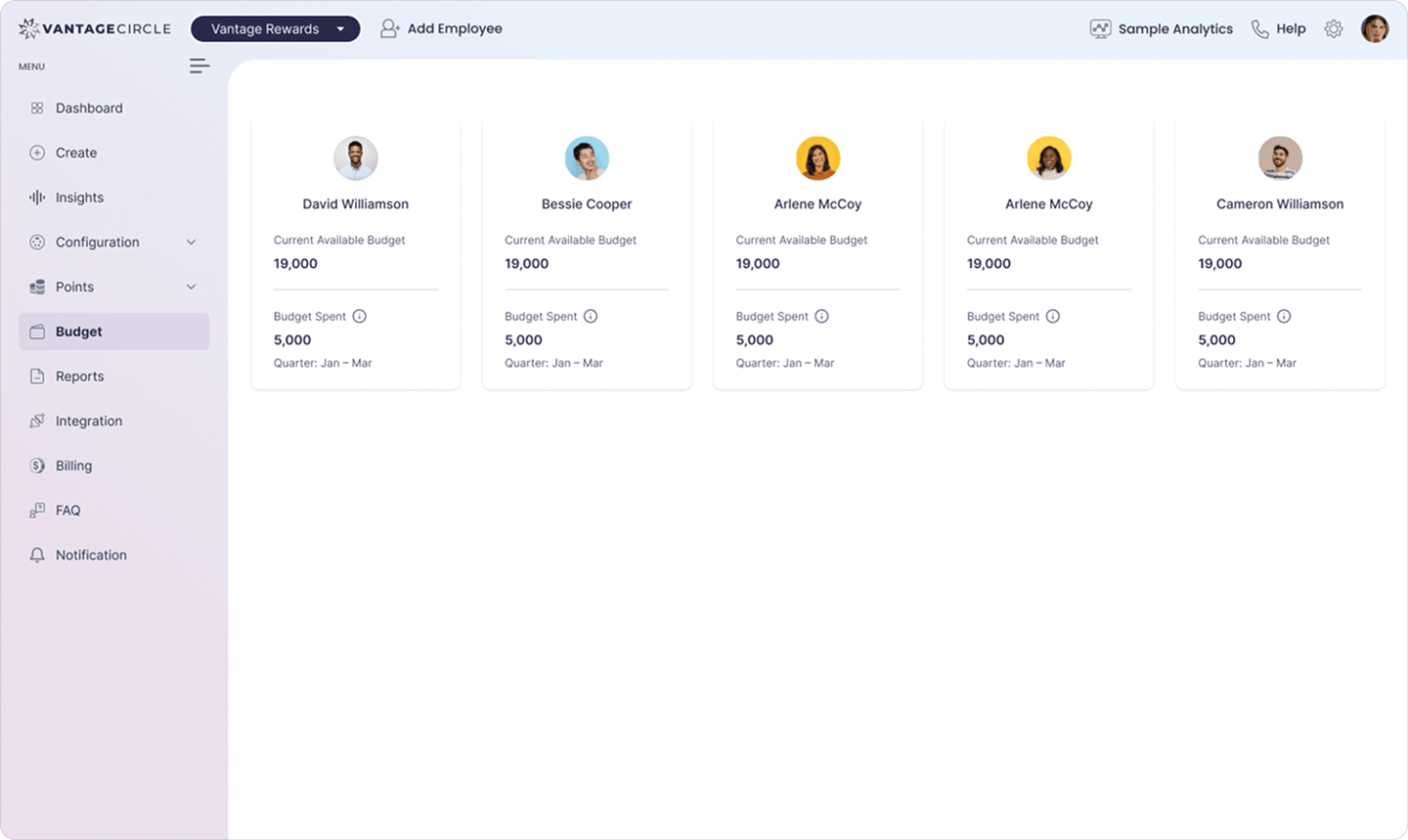
A per-manager limit (the amount one manager can approve alone) keeps most bonuses same-day. Awards above that limit go to HR or a senior leader for co-approval. Quarterly wallet statements help managers pace their spend and avoid running out of budget before year-end.
4. Set Sizing Tiers and the Approval Rule
Use the 4-tier model from the "How much" section above: thank-you, standout, high-impact, and exceptional. Assign a specific approval level to each tier, and publish the definitions so managers apply them consistently. When employees understand what a given contribution earns, the program feels fairer across the board.
5. Choose the Payout Format and Tax Handling
Decide whether to pay by payroll, gift card, or reward points before the program launches. Document the tax treatment in the program guide and share it with both managers and employees at launch, not after the first bonus is processed.
6. Communicate the Program and Its Criteria
Send program criteria, tier definitions, and tax information to all employees and managers before the first award goes out. Use a company-wide meeting for the initial launch, then keep the criteria permanently visible on your intranet or HR platform. Employees who understand the rules from the start are far more likely to experience the program as fair and motivating.
7. Track Who Gets Bonuses and Review Quarterly
Check award distribution by team, manager, role, gender, and location every quarter to catch fairness gaps before they become retention issues.
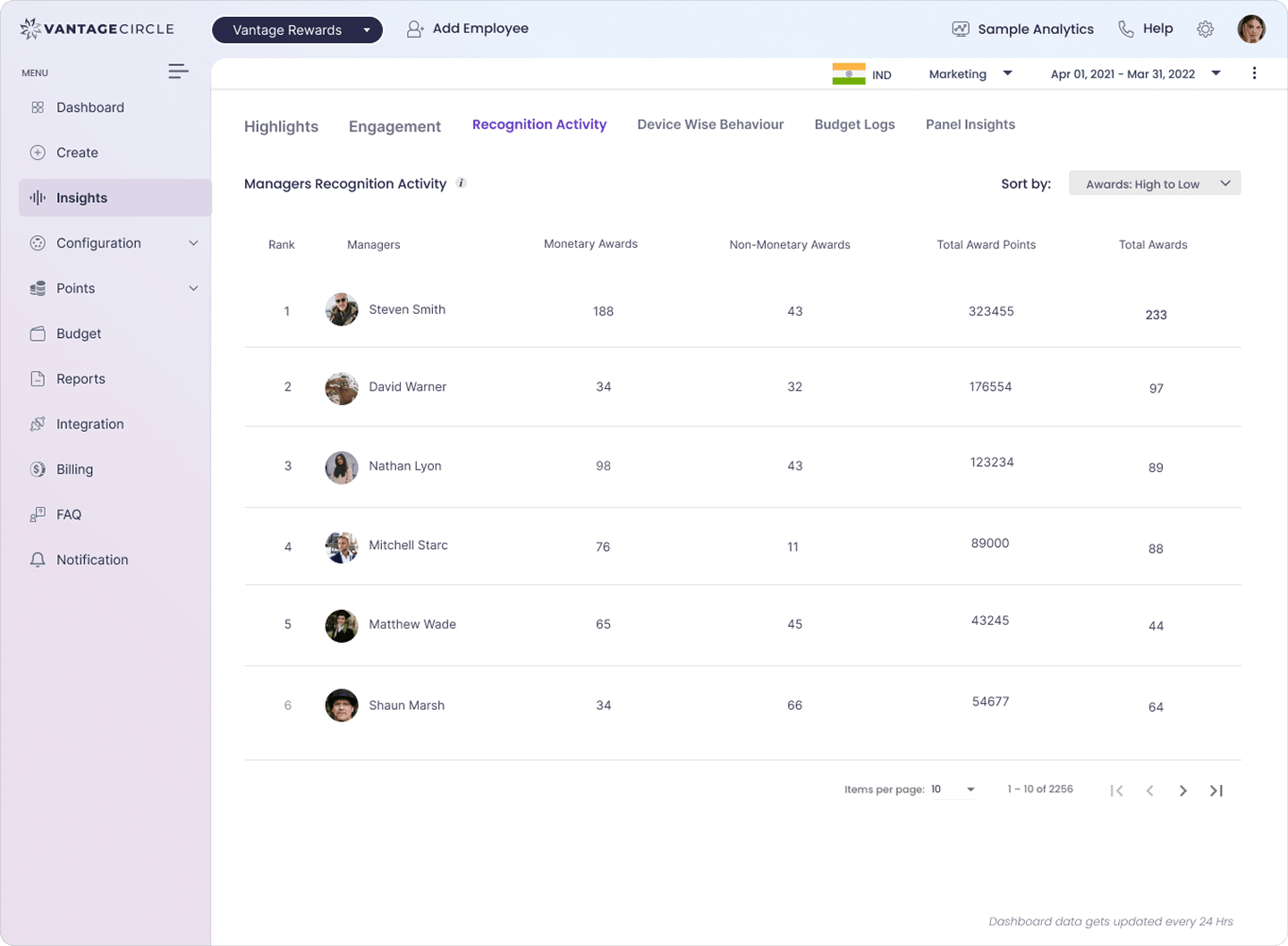
Fairness problems show up in the data before they show up in exit interviews. A report showing award counts and the monetary vs non-monetary split by manager tells you which teams are under-recognized and which managers are over- or under-using their wallets. Adjust criteria, communications, or manager coaching based on what the data shows each quarter. For a full fairness checklist, see inclusive recognition practices.
6 Spot Bonus Examples by Team
The best spot bonuses name one specific result, are paid within days of the contribution, and are sized to the actual impact.
The 6 examples below are illustrative. Dollar amounts reflect the 4-tier sizing framework above.
| Team | What happened | Format | Suggested tier |
|---|---|---|---|
| Sales | Closed an at-risk renewal representing three months of revenue | Reward points | High-impact ($1,000 to $2,000) |
| Customer support | Resolved an escalated account and prevented churn | Cash | Standout ($300 to $500) |
| Engineering | Fixed a production outage overnight, limiting downtime to two hours | Cash | Standout ($500 to $800) |
| Operations | Identified a process change saving $15,000 per quarter | Reward points | High-impact ($1,000 to $1,500) |
| HR | Filled a critical leadership vacancy three weeks ahead of schedule | Gift card | Standout ($250 to $400) |
| Cross-functional team | Shipped a product launch on time across four departments | Points, split equally | High-impact (e.g., $2,000 total split equally across the team) |
For team-specific program design in revenue roles, see sales incentives.
Running Spot Bonuses on Vantage Recognition
Vantage Recognition lets managers send spot bonuses as reward points from a pre-set budget wallet, route larger awards through an approval workflow, and pay them out at equal purchasing power in 100+ countries.
Managers select a recognition type (appreciation for direct awards, nomination for awards that need a second approver), pick an amount within their wallet limit, tag the award to a company value, and post the reason publicly to the recognition feed. Awards above the per-manager limit go through a nomination and approval flow before the employee is notified, keeping most bonuses same-day while ensuring larger awards get proper sign-off.
Employees redeem their points for gift cards, merchandise, or experiences from a global catalog rather than waiting for the next payroll run.
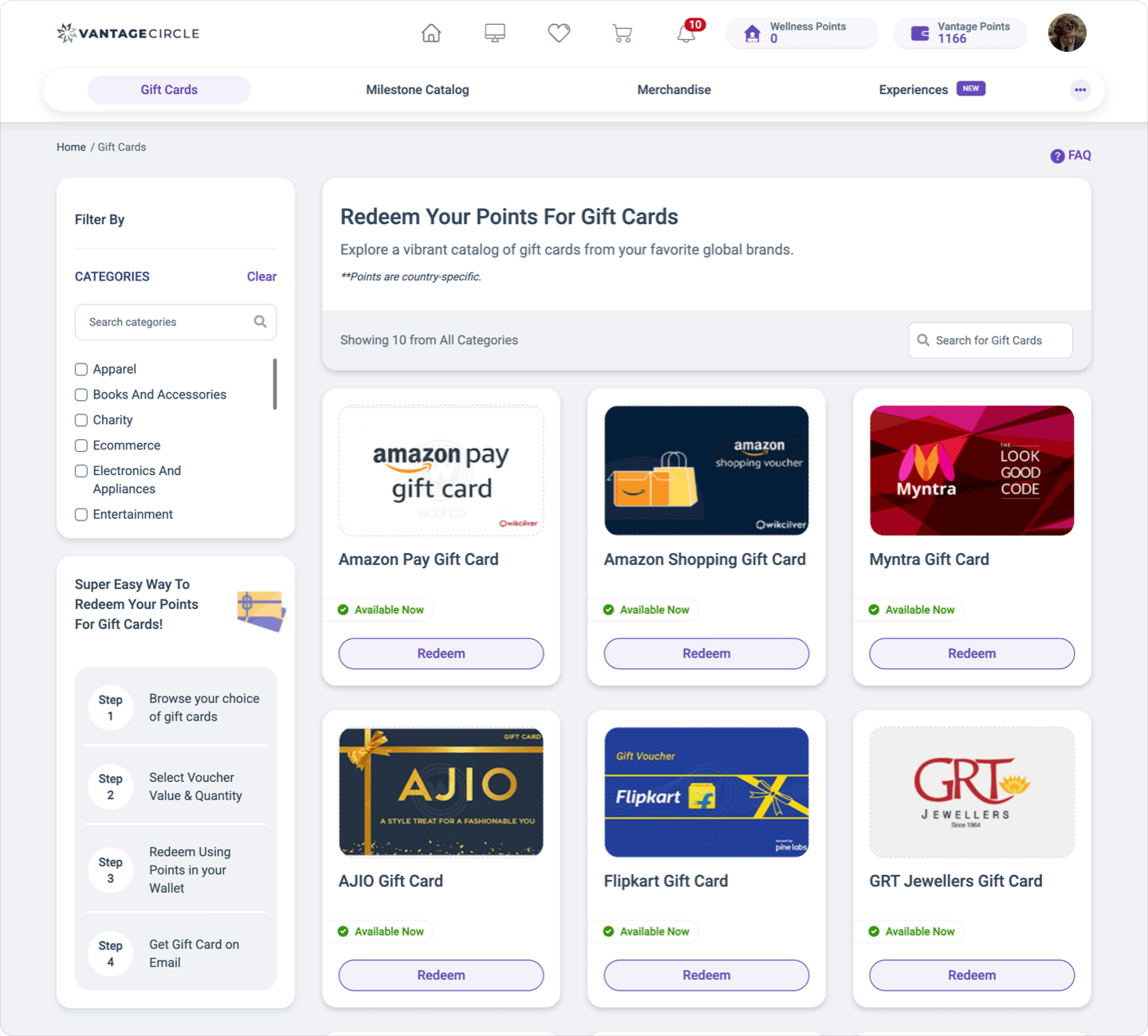
To enable fair recognition for employees across countries, our rewarding system is built on the SOLI (Standard of Living Index) framework. A "standout" bonus carries equal purchasing power in Austin and Bengaluru without requiring separate budgets per country, making the recognition equitable for distributed teams worldwide.
Recognition analytics give HR a real-time view of award counts, monetary vs non-monetary split, and spend by manager, so distribution gaps surface before they affect employee morale or retention.
Conclusion
The mechanics are straightforward: set clear criteria, give managers a budget wallet, require approval for larger awards, and check the distribution data every quarter. The programs that get the most from spot bonuses pair the monetary award with a public reason, making the recognition visible to the whole team rather than just the recipient.
Consider adding peer-to-peer recognition to extend the same principle: any employee can surface a contribution a manager might have missed.
For a broader look at building a culture of employee rewards and recognition, see our full guide.
FAQs
Is a Spot Bonus Taxed?
Yes. In the US, a spot bonus is taxed as supplemental wages (IRS Publication 15, 2026). Employers can use the flat 22% withholding method for bonuses under $1 million, or the aggregate method, which applies the employee's standard withholding rate. The 37% rate is mandatory for any amount exceeding $1 million. FICA (Social Security and Medicare) and applicable state income tax also apply. The 22% is a withholding rate, not the employee's final tax liability: employees whose marginal rate is below 22% receive the excess back at filing.
How Much Is an Average Spot Bonus?
Spot bonus amounts vary widely by company size and the significance of the contribution. Salesforce (2024) puts the typical corporate range at $100 to $5,000+. The 4-tier sizing framework above gives a structured way to calibrate amounts to the level of contribution.
How Much Is the Google Spot Bonus?
Google has not published a standard spot bonus amount. Google operates a peer bonus program, which is a peer-nominated monetary award distinct from a manager-issued spot bonus. No official figure has been disclosed. Employee accounts on Glassdoor describe a range of amounts, but none of those reports constitute an official or verified figure.
What Does "Spot Incentive" Mean?
"Spot incentive" and "spot bonus" are used interchangeably in most HR contexts. Both refer to an immediate, one-time monetary reward for a specific contribution. Some companies prefer "spot incentive" to emphasize the motivational intent of the payment, particularly in sales and customer service roles where incentive language is standard practice.
What Is the Difference Between a Retention Bonus and a Spot Bonus?
A retention bonus pays an employee to stay through a specific date; a spot bonus pays for a specific contribution made right now. Retention bonuses are planned in advance and tied to a commitment period, typically 6 to 24 months. Spot bonuses are discretionary and awarded within days of the triggering event, with no prior commitment required from the employee.
Who Is Eligible for a Spot Bonus?
Eligibility depends on your company's program design. Most programs extend eligibility to all full-time employees. Some include part-time workers and contractors; others limit awards to salaried staff. For team awards, define the maximum team size and award-splitting rules before accepting the first nomination. Publishing the eligibility criteria in your program guide ensures managers apply them consistently from day one.
Written by